Top 10 Logic-Based Learning Activities for Kids: Boost Their Skills
As parents and educators, we all want to equip children with the skills they need to navigate a complex world. While traditional academics are vital, fostering strong critical thinking and problem-solving abilities is equally crucial. Many children today gravitate towards passive entertainment, making it challenging to introduce activities that actively engage their developing minds.
This is where logic-based learning activities shine. They are not just about finding the right answer; they are about understanding the process, developing analytical skills, and cultivating patience and persistence. At Logicology, we believe that learning should be an adventure, sparking curiosity and building a solid foundation for future success.
In this comprehensive guide, we will explore the top logic-based learning activities that can transform playtime into powerful learning experiences for kids of all ages. From classic puzzles to modern educational games, we will help you choose the best tools to ignite your child's innate curiosity and sharpen their cognitive edge.
How To Choose The Right Logic-Based Learning Activities
Selecting the perfect logic-based activity for your child involves more than just picking something off a shelf. Consider these key criteria to ensure you find activities that are engaging, educational, and appropriately challenging for their developmental stage.
- Age Appropriateness: Ensure the activity matches your child's cognitive and motor skills. Puzzles too difficult can lead to frustration, while those too easy might quickly lose their appeal. Always check manufacturer recommendations and consider your child's individual learning pace.
- Engagement Factor: Look for activities with themes, colors, or interactive elements that genuinely captivate your child's interest. An activity might be brilliant for logic, but if it does not hold their attention, its educational value will be limited. Fun is a powerful motivator for learning.
- Educational Value: Beyond just entertainment, assess what specific logical skills the activity targets. Does it improve deductive reasoning, spatial awareness, sequential thinking, or problem-solving? A good activity will offer clear learning objectives and transferable skills.
- Replayability and Durability: Opt for activities that can be enjoyed multiple times without losing their challenge or appeal. Materials should be robust enough to withstand enthusiastic play. High replayability ensures long-term value and sustained skill development.
- Parental Involvement: Decide if you prefer activities for independent play or those that encourage collaborative family engagement. Some logic games are fantastic for bonding and teaching teamwork, while others are designed to foster autonomous thinking.
- Skill Focus: Different activities target different logical domains. Some focus on mathematical logic, others on verbal reasoning, and many on visual-spatial skills. Choose activities that complement your child's strengths and areas where they could use a little extra support.

Quick Look: Top Logic-Based Learning Activities
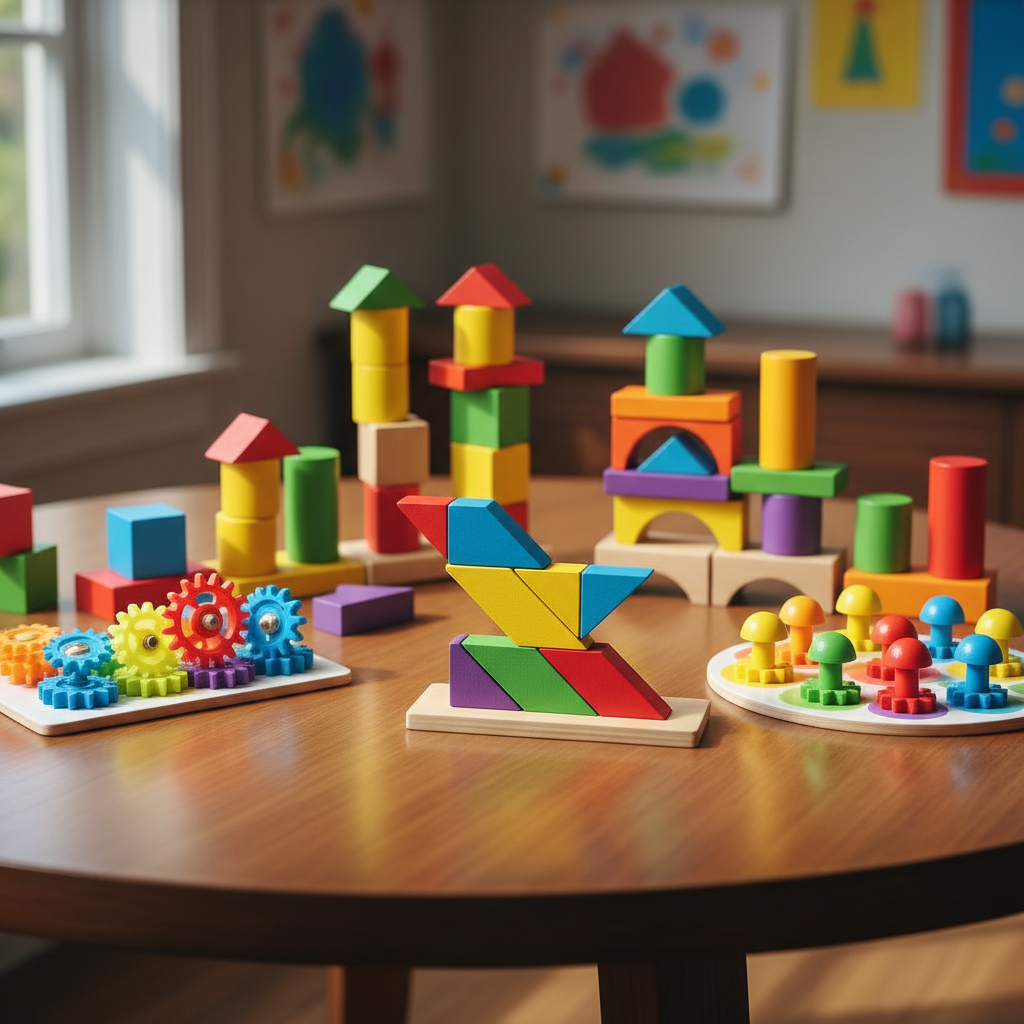
Here is a brief overview of some of the best logic-based learning activities that can help children develop crucial cognitive skills. Each offers a unique way to engage young minds and foster a love for critical thinking.
- Sudoku for Kids - Introduces fundamental number logic and pattern recognition through simplified grids with symbols or colors.
- Tangrams - Develops spatial reasoning, geometric understanding, and creative problem-solving by arranging seven flat shapes.
- Chess/Checkers - Enhances strategic thinking, foresight, planning, and understanding of cause-and-effect relationships.
- Logic Grid Puzzles - Cultivates deductive reasoning, information processing, and methodical analysis for older children.
- Screen-Free Coding Games - Teaches sequential logic, algorithmic thinking, and basic computational concepts without relying on digital devices.
- Brain Teaser Books - Offers a diverse collection of puzzles, riddles, and challenges to stimulate various cognitive skills.
- STEM Building Kits - Fosters hands-on engineering principles, spatial visualization, and critical analysis through construction.
- At-Home Escape Room Kits - Encourages collaborative problem-solving, creative thinking, and puzzle decoding in a fun, immersive setting.
- Riddle Books - Improves linguistic logic, creative inference, and vocabulary while promoting outside-the-box thinking.
- Pattern Blocks - Introduces geometry, symmetry, and visual pattern recognition through colorful, manipulable shapes.
Detailed Dive: Our Top Logic-Based Activities
Let us take a closer look at some of our favorite logic-based activities, highlighting what makes them excellent choices for children and what you might consider when introducing them.
1. Sudoku for Kids
Best For: Developing number sense, pattern recognition, and focus. Suitable for elementary school-aged children and up, with variations for younger kids using pictures or shapes.
Why You Will Love It: Sudoku trains children to think systematically and apply rules consistently. It helps improve concentration and logical deduction, moving from simple cells to entire rows, columns, and blocks. It is a fantastic way to introduce mathematical logic in a fun, non-intimidating format.
Keep In Mind: Start with simpler grids (4x4 or 6x6) and use versions with pictures or colors before moving to numbers. Some children might need initial guidance to grasp the "only one of each" rule within different sections.
2. Tangrams
Best For: Enhancing spatial reasoning, geometric understanding, and creative problem-solving. Ideal for preschoolers through early elementary school.
Why You Will Love It: Tangrams are an ancient Chinese puzzle consisting of seven flat shapes, called tans, which can be arranged to form countless designs. This activity boosts visual-spatial skills, helps children understand geometry through hands-on manipulation, and encourages imaginative construction. It is great for developing fine motor skills too.
Keep In Mind: While seemingly simple, some complex designs can be challenging. Younger children might benefit from tracing shapes or starting with puzzles that clearly outline where each piece goes.
3. Chess and Checkers
Best For: Cultivating strategic thinking, foresight, planning, and understanding cause-and-effect. Generally best for children aged 6 and above.
Why You Will Love It: These classic board games are powerhouses for cognitive development. They teach children to anticipate opponents' moves, plan several steps ahead, and adapt strategies in real-time. Chess, in particular, is renowned for improving abstract thinking and decision-making skills under pressure.
Keep In Mind: Both games can have a steep learning curve. Start with simple rules, focus on understanding piece movements, and encourage practice. Patience is key, and celebrating small victories will keep children motivated.
4. Logic Grid Puzzles
Best For: Developing deductive reasoning, information processing, and methodical analysis. Best suited for children aged 8 and up who have strong reading comprehension.
Why You Will Love It: Logic grid puzzles present a scenario with several categories and clues, requiring the solver to use deduction to fill in a grid and determine the correct pairings. This activity hones critical reading, inferential thinking, and the ability to process multiple pieces of information simultaneously. It is like being a detective!
Keep In Mind: These puzzles can be quite challenging and are best for children who enjoy a methodical, step-by-step approach to problem-solving. Younger kids might find the amount of text overwhelming.
5. Screen-Free Coding Games (e.g., Robot Turtles, Code & Go Robot Mouse)
Best For: Introducing foundational coding concepts like sequencing, algorithms, and debugging without screens. Suitable for preschoolers to early elementary school.
Why You Will Love It: These engaging board games teach children the core principles of coding by having them program a robot or character to navigate a maze or achieve a goal using physical tokens or cards. They develop sequential logic, problem-solving, and computational thinking in a hands-on, collaborative way.
Keep In Mind: These games often require initial adult setup and guidance to explain the rules and concepts. They are best played with an engaged parent or group for maximum benefit.
6. STEM Building Kits (e.g., K'nex, Snap Circuits, LEGO Technic)
Best For: Fostering engineering principles, spatial visualization, and hands-on critical analysis. Wide age range, from early elementary to teens, depending on complexity.
Why You Will Love It: STEM building kits challenge children to construct models, machines, or circuits, applying principles of physics, engineering, and design. They encourage trial-and-error, spatial reasoning, and the ability to follow instructions while also allowing for creative free-building and experimentation.
Keep In Mind: Kits with many small parts might not be suitable for very young children or those prone to putting things in their mouths. Always supervise and ensure age-appropriate choices. Some kits can be quite intricate and require patience.
7. At-Home Escape Room Kits for Kids
Best For: Encouraging teamwork, creative thinking, and puzzle-solving under time pressure. Excellent for family game nights or small groups of friends, typically for ages 8 and up.
Why You Will Love It: Escape room kits bring the excitement of a real escape room into your home, featuring a series of interconnected puzzles, riddles, and challenges that participants must solve to "escape" or complete a mission. They foster collaboration, communication, and diverse problem-solving strategies, often involving wordplay, logic, and observation.
Keep In Mind: These kits often require adult facilitation to set up and guide the experience. Ensure the theme and complexity are suitable for your child's age group to maximize engagement and minimize frustration.
Best Logic Activities For Different Scenarios
Tailoring the activity to the situation can greatly enhance its impact and your child's enjoyment. Here are some recommendations for various scenarios:
- For Solo Play & Focused Concentration: Activities like Sudoku, Brain Teaser Books, or advanced Logic Grid Puzzles are excellent for independent children who enjoy working through challenges at their own pace. They help develop self-reliance and deep concentration.
- For Group Collaboration & Teamwork: At-Home Escape Room Kits, Chess (played as a mini-tournament), or even complex STEM Building Kits that require multiple hands are perfect for fostering communication and collaborative problem-solving skills. These scenarios teach valuable lessons in negotiation and shared achievement.
- For Creative Exploration & Spatial Development: Tangrams, Pattern Blocks, and open-ended STEM Building Kits (like LEGO Classic or magnetic tiles) are ideal for children who love to build, design, and experiment. They encourage imaginative thinking and an intuitive understanding of spatial relationships.
- For Travel & On-the-Go Engagement: Portable riddle books, small logic puzzle sets, or simplified Sudoku books are fantastic for keeping minds active during car rides, waiting times, or quiet moments. These activities are compact and require minimal setup, making them perfect companions.
Choosing the Right Challenge Level
The key to successful engagement with logic-based activities is finding the "just right" challenge level. Too easy, and children get bored; too hard, and they become frustrated. Here is how to strike that balance:
- Start Simple, Gradually Increase Difficulty: Always begin with easier versions of a game or puzzle. This builds confidence and allows children to grasp the basic mechanics before facing more complex problems. Gradually introduce harder levels as their skills improve.
- Observe Engagement Levels: Pay close attention to your child's behavior. Are they fully immersed, or are they getting distracted? Are they making progress, or are they stuck? Their engagement is a clear indicator of whether the activity is appropriately challenging.
- Offer Gentle Encouragement, Not Solutions: When your child faces a hurdle, resist the urge to give them the answer directly. Instead, ask guiding questions: "What have you tried so far?" "What if you looked at it from a different angle?" "Are there any rules you might be forgetting?" This teaches them to persevere and develop their own problem-solving strategies.
- Focus on the Process, Not Just the Outcome: Emphasize the thinking process, the effort, and the strategies applied, rather than solely celebrating a correct answer. This helps children develop a growth mindset, understanding that learning is about effort and continuous improvement, not just being "smart."
Maximizing Engagement and Longevity
To ensure your investment in logic-based learning activities continues to yield benefits, consider these tips for keeping children engaged and making the most of these valuable tools.
- Rotate Activities to Keep Them Fresh: Do not stick to just one activity. Offer a variety of logic games and puzzles, rotating them periodically to prevent boredom and expose children to different types of cognitive challenges. This broadens their skill set and maintains interest.
- Incorporate into Daily Routines: Dedicate a specific "logic time" each day or a few times a week, even if it is just 15-20 minutes. Regular, consistent engagement is more effective than infrequent, long sessions. Making it a routine helps children anticipate and look forward to the activity.
- Celebrate Progress, Not Just Wins: Acknowledge their effort, their new strategies, and any breakthroughs, however small. "I noticed you tried a new approach there, that was very clever!" is more impactful than just "Good job!" This reinforces the value of the learning journey.
- Model Enthusiasm for Learning: Show genuine interest in the activities yourself. Play alongside them, ask questions, and even admit when you find a puzzle challenging. Your enthusiasm is contagious and sets a positive example for lifelong learning.
- Connect Activities to Real-World Scenarios: Help children see how the logic skills they are developing apply to everyday life. "Remember how we solved that Sudoku? It is a bit like organizing your toys, figuring out where everything fits." This makes the learning feel relevant and practical.
Your Next Step
Logic-based learning activities are much more than just games; they are powerful tools for developing crucial cognitive abilities that will serve children throughout their lives. By engaging with these activities, children cultivate critical thinking, problem-solving, creativity, and a resilient mindset.
We encourage you to explore the exciting world of logic-based learning and find the perfect activities to spark joy and intellectual growth in your child. Discover how playful challenges can lead to profound learning experiences. Visit our games and products pages to find carefully curated selections designed to ignite young minds.
Sources
FAQ
Q: What age are logic-based activities suitable for?
A: Logic-based activities are suitable for children of all ages, with complexity varying greatly. For preschoolers, activities might involve simple visual matching or sorting. Elementary school children can enjoy Sudoku for Kids or Tangrams. Older children and teens can tackle complex logic grid puzzles, chess, or advanced STEM kits. The key is to choose age-appropriate challenges.
Q: How do these activities benefit my child's academic performance?
A: Logic-based activities build foundational cognitive skills such as problem-solving, analytical thinking, critical reasoning, and focus. These skills are transferable and crucial across all academic subjects. For example, the deductive reasoning used in a logic puzzle directly aids in understanding mathematical proofs or analyzing literature.
Q: My child gets frustrated easily. How can I help them stay engaged?
A: If your child gets frustrated, first ensure the activity is not too difficult for their current skill level. Start with easier challenges to build confidence. Offer encouragement without giving away answers, asking guiding questions instead ("What else could you try?"). Emphasize the process of thinking and learning, rather than just the outcome, to foster resilience.
Q: Are screen-based logic games as effective as physical ones?
A: Both screen-based and physical logic games can be highly effective. Physical games often provide a tactile experience, encourage fine motor skill development, and facilitate social interaction when played with others. Screen-based games can offer adaptive difficulty, immediate feedback, and interactive tutorials. A balanced approach, incorporating both types, often yields the best results.
Q: How often should my child engage in logic-based activities?
A: Regular, consistent engagement is more beneficial than infrequent, long sessions. Aim for short, focused periods, such as 15-30 minutes a few times a week. This helps reinforce learning, prevents burnout, and makes the activity a sustainable part of their routine. Consistency builds habits of thinking and problem-solving.